
Life is changing, and so is the way people search for solutions.
These days, everyone’s online. Whether you like social media or not, if you want to grow your coaching business, you need to show up where your potential clients are.
The good news? You don’t need to be a social media expert to build your presence. It is not easy, I get it. But it doesn’t have to be complicated either.
While algorithms and trends may shift, the core principles of growing a strong and sustainable brand stay the same. Once you understand these principles, you’ll know how to use any platform with confidence.
In this guide, I will walk you through the essential steps to build a simple yet effective social media strategy for life coaches like you.
Let’s dive in.

Source: Unsplash
Why should life coaches use social media?
Not because of FOMO.
Not because “everyone is doing it”
Because it really works, especially when you do it right.
Let’s be real: With over 5 billion people using social media, chances are your ideal clients are already there. So why not reach them where they are?
Gone are the days when someone walked into your office and waited in the long line to seek your help.
They scroll online. And in just a few seconds, they come across dozens, even hundreds, of other options.
If you’re not showing up *in the right way*, you’re missing out.
But when you do show up with value, connection, and trust, that’s when the magic happens.
You can support people from anywhere, right from where you are.
And here’s the best part: it doesn’t cost you anything. Social media is free.
You don’t need to run ads to get results. When you understand the foundation of an effective strategy, you can grow your business organically on social media.
That’s exactly how I helped Me&We – the life coaching brand, grow from zero, without spending a single penny on ads.
What platforms should you use?
There are plenty of social media platforms out there. So, how do you know which one to choose?
Let’s explore the most popular options and see which ones work for life coaches.

Source: Unsplash
So far, Facebook still has the largest number of users among platforms.
That said, its algorithm has changed a lot over the years. These days, Facebook prioritizes content from family members, close friends, and groups you interact with regularly. And of course, paid advertising.
If someone follows your page but doesn’t engage with your posts for a while, chances are they won’t even see your content in their feed.
So, is Facebook the best place to grow your coaching business from scratch?
In my opinion, not really.
But here is what Facebook is great for: building a community, nurturing your audience, and turning followers into your clients. It works well when you’ve already built some level of personal branding.
If you’re just starting out, people don’t know who you are or what you do yet, which makes it harder for them to join your group or say yes to your offer right away. That’s something to keep in mind before choosing Facebook as your main platform.
From what I’ve seen and researched, Instagram is the go-to platform for many life coaches.
It’s a great place to express your vibe and your energy. You can show up through photos, videos, stories, and highlights. These features give potential clients a chance to connect with you in real time and get to know who you are beyond just your services.
Unlike Facebook, where users range broadly from 15 to 60+, Instagram users tend to fall between 20 and 35 years old.
So, if you aim to help women in their 40s or older, Instagram might not be the best fit.
Still, if visual content and storytelling are your strengths, Instagram is a strong contender.
TikTok
TikTok has grown rapidly in recent years.
What makes TikTok stand out is how easily it puts your content in front of people who don’t even follow you. Even if you only have 100 followers, your video can still reach thousands and get high engagement.
But there is a trade-off. Most users scroll through the “For You” feed, not the “Following” tab. So, your followers might not see your content regularly.
TikTok is a powerful platform to boost visibility and attract new eyes to your coaching brand. But if your goal is to build long-term trust and relationships, you’ll want to combine it with platforms that support deeper connection, like Instagram or email.
Threads
Threads is a new platform, but it has gained momentum, especially among users aged 18 to 35.
It was initially built for short and text-based content. But now, posts with images and videos perform very well on this platform.
Like TikTok in its early days, Threads boosts organic reach, helping your content go viral even if you don’t have a big following.
But there is something to keep in mind. Threads sends notifications to your followers every time you post, comment, and reply. That can help increase visibility, but at the same time, it can also overwhelm your followers if you are a highly active person.
Imagine you post 5 times and comment at least 10 times per day. That’s a lot of notifications for your audience. Some will love it. Others might mute you.
So if you choose Threads, be intentional. Show up consistently, but with care.
LinkedIn is well-known for B2B networking and career development. However, if your coaching services are designed for professionals, leaders, or corporate teams, LinkedIn can be a goldmine.
For example, one of my clients works with employees who struggle with stress and confidence at work, as well as leaders who want to master emotional intelligence and communication. In this case, LinkedIn is the place to be.

Source: Unsplash
How to know which platform is for you?
So, with all these platforms, how do you choose the right one for your coaching business?
Let’s break it down into two simple questions:
- Who do you want to help? And where are they hanging out?
Think about your ideal client. What’s their age, lifestyle, and daily habits? Do a little research to find out where they spend the most time online. If you show up on a platform they barely use, your effort won’t get far.
- What content format feels most natural to you?
Not everyone loves being on camera. Some people prefer writing. Others thrive in spontaneous conversations. Choose a platform that plays to your strengths, because when you enjoy the process, you’ll show up more consistently.
And on social media, consistency is key.
How many platforms should you use?
A common mistake many coaches make when starting out is trying to be everywhere at once.
Showing up on multiple platforms might sound like a smart move. But the truth is, it often leads to burnout and inconsistent results.
So when you’re getting started, focus on 1-2 platforms that align with your strengths and where your ideal clients spend the most time. That way, you can show up consistently, build real relationships and avoid spreading yourself too thin.
Later on, when you have built a solid foundation, you can consider exploring more platforms if it makes sense for your business. But in the beginning, I believe simplicity = sustainability.
In case you want to expand your reach, consider repurposing your content across different platforms. But do it wisely.
For example, you can turn your blog post into a carousel for Instagram, a short video for TikTok, a short post on Threads, or LinkedIn.
5 steps to grow on social media.
Before we dive into strategy, there’s one thing that makes everything easier:
Know your niche. Understand your audience.
The more specific you are, the faster you’ll stand out. People tend to buy things in a store specializing in a specific product rather than going to the grocery store that sells hundreds of things. Or when you are looking for skincare advice, would you prefer a general health page or one that focuses only on sensitive skin like yours?
Narrowing down your niche won’t limit your growth. It helps you to stay focused instead.
Once you know who you help and how you help them, you’re ready to build your strategy.
Here are 5 simple steps to help you grow your coaching brand on social media without the overwhelm.
1. Set a clear goal – What is your goal with social media?
First, what do you want from your social media presence?
Do you want to build awareness?
Grow your email list?
Or get more clients?
Every coach will have different goals. What matters is that you know what success looks like for you.
Setting a clear goal gives you direction. It becomes your North Star, helping you stay focused and measure whether your efforts are paying off.
That said, your goal needs to be specific than just “Increase brand awareness” or “get more engagement”
To set an effective goal, consider using the SMART framework.
That means it should be:
- Specific
- Measurable
- Achievable
- Relatable
- Time-bound
Here are some examples of SMART goals:
- Grow from 100 to 500 Instagram followers in 2 months
- Get 500 profile visits by the end of May
- Receive 10 DMs from potential clients this month
…
Once you have a clear goal, it’s much easier to plan your content, track your progress, and stay motivated, especially on the tough days.
2. Build your content strategy
Content strategy is the one that gets you to your goal.
Your content is how people discover you, connect with you, and eventually, trust you enough to work with you. So, it’s worth taking the time to do it right.
A strong content strategy has a few key components:
Content calendar:
Consider it as your roadmap. It helps you plan ahead, stay consistent, and avoid the stress of last-minute posting. Start by mapping out your posts for the month, including what you’ll post, when, and on which platform.
You don’t need to fill it out every day. Even planning 2-3 posts per week makes a big difference. Think of it as creating structure without rigidity.

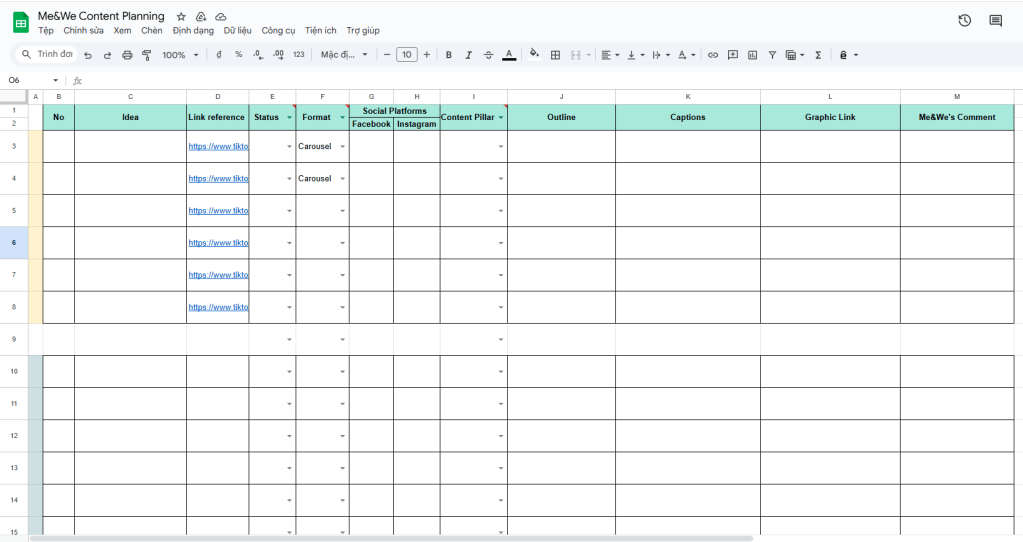
Content Calendar and Content Planning Templates I’m using
Content pillars:
Content pillars are the core topics you want to be known for. And they should align with what your audience cares about.
As a life coach, your pillars can be: emotional management, inner healing, relationships, or mindset shifts,…
Choose 203 main pillars and build your content around them. This keeps your messaging focused, helps you avoid content fatigue, and positions you as a thought leader in your niche.
Content angles:
Content angles are different ways to approach the same topic.
For example, if your content pillar is “managing negative emotions”, you can approach it from several angles:
Educational: What are emotional triggers?
Inspirational: “You are not your emotion” quote
Promotional: I help my client build emotional awareness. Here is how I can help you to do the same.
Having multiple angles ensures variety while staying aligned with your message.
Frequency:
How often should you post?
Well, that depends on your capacity or energy. There is no fixed rule for that.
Start with a schedule that feels doable. For example, posting twice a week on Instagram and once on Threads.
What matters most is your commitment to stay consistent. When your audience knows you show up every Tuesday and Friday, they start looking forward to your content. That’s how you build trust over time.
Content distribution:
Many coaches make the mistake of only posting promotional content. But social media is not a direct-response channel where your clients will buy your service after they follow you or read some of your posts.
Instead, they come to be inspired, educated, or entertained.
80/20 is a great rule to follow to contribute your content:
- 80% of your content should be value-driven (educational, inspirational, personal stories)
- 20% can be promotional (offers, testimonials, service info)
This mix ensures you meet people at different stages of their journey, from a new follower to a warm lead ready to take action.
3. Actively engage with the audience.
Let’s be honest, posting alone isn’t enough.
If you want to grow on social media, you can’t just post and ghost. You need to show up and engage.
Every platform values interaction. The more active and human you are, the more your content will be prioritized, and the more trust you’ll build with your audience.

Source: Unsplash
Here is a simple engagement strategy you can start with:
Engage with the thought leaders in your niche: Make a list of 5-10 famous accounts in your niche (or related niches) that already have an audience you’d like to attract.
Like, comment, and respond to their content meaningfully. Not to get their attention, but to show up in front of their audience.
But make sure to leave meaningful comments that add value or perspective. People notice that. It helps you build relationships without pitching anything.
Engage with nano or micro influencers who share your audience:
These don’t have to be other coaches. They can be creators who speak to the same demographic, for example, women-centered wellness pages, mental health, or journaling guides.
It is not necessary that they are in your niche. Similarly, engaging with these accounts helps you grab your target audience’s attention and foster future collaboration.
Engage with your target audience: Respond to their comments, reply to their inbox or DMs, engage with their stories or posts actively… These activities help you build trust and a deeper connection with your audience. When you show up for long enough, they get familiar with your presence and’ll remember you when they need help.
4. Collaborate with others
Collaboration is one of the most powerful ways to expand your reach, build credibility, and connect with a broader audience, especially when you’re still growing.
But here’s the thing: collaboration isn’t just about sending someone a message and asking to “do something together”. It’s about building authentic relationships. And that takes time.
You can start showing support by:
- Following people you admire
- Engaging consistently with their content
- Share their work (with credit)
When you show up as a supporter first, you’re more likely to build a foundation of trust, which can naturally lead to collaboration opportunities down the line.
Collaborating with influencers who have a large following can feel overwhelming. So, instead, start by connecting with micro and nano influencers who have smaller but engaged communities. The key here is choosing partners who share similar values, serve a similar audience, and believe in what you do.
There are many for collaboration on social media:
- Co-create a post or carousel
- Host a live Q&A or Instagram Live
- Run a mini workshop, webinar, or panel together
- Tag each other in content where relevant
- Interview each other on Reels or YouTube Shorts
5. Measure performance
After all the planning, posting, and engaging, how do you know if it’s actually working?
That’s where tracking your performance comes in. And the good news is, you don’t need to be a data analyst to do this.
Monthly tracking and analyzing your metrics will give you clear insights into what’s working and what’s not. You will know whether your efforts are paying off. And based on that, you can make adjustments to improve your results over time. That’s how you grow with intention.
So, what metrics should you monitor?
Many people may get overwhelmed working with data, especially when they have no experience. The good news is that you don’t need to track all the data or metrics.
Go back to the SMART goal you set in step 1. What did you want to achieve? More reach? Better engagement? Or more clients? Once you’re clear on that, you only need to track the metrics that matter to that specific goal.

Source: Unsplash
Here is a simple guide:
If your goal is reach => focus on: impression, reach, profile visits, new followers
If your goal is engagement => focus on: likes, comments, shares, saves, engagement rate.
If your goal is conversion => focus on: CTR, conversion rate, and Dms/Inb
And review your content to find out:
– Which posts got the most saves or comments?
– What kind of content led to DMs or client inquiries?
– Are you getting closer to your goal, or stuck?
These insights help you adjust, refine, and improve as you go, so you’re not just posting into the void.
And don’t stress about vanity numbers. Having 10k followers means nothing if none of them turn into clients.
I’ve seen a brand with 30k followers struggle to get clients while a 3k-follower brand generates steady monthly clients.
So the key here is the right strategy, not followers.
Mistakes coaches should avoid
Create too much educational content.
Educational content is helpful. It helps you build trust, show expertise, increase reach, and nurture your audience. But when every post feels like Wikipedia, your brand can feel distant and forgettable.
People follow coaches not just for information, but for connection. They want to see your values, your energy, and your stories. They want to feel like you get what they’re going through, not just that you can explain it.
One of the most powerful ways to create content today is by blending education with personal stories. This creates both value and emotional connection.
For example:
“How to overcome a toxic relationship” can sound generic,
But “How I helped my client walk away from a toxic relationship and build her confidence to find true love again” sounds real, relatable, and trustworthy.
When your audience feels seen, they’re more likely to trust you and reach out for support.
Follow the trend and try to go viral.
Going viral might sound exciting. But it’s not a strategy.

Source: Unsplash
And it’s definitely not a shortcut to building a sustainable coaching business.
Sure, trends can help you reach a large audience and get a lot of views. But the truth is, you can’t control what goes viral. You can’t predict it. And you certainly can’t build a solid brand on it.
Even worse, when you keep chasing trends that don’t align with your message or values, you end up feeling disconnected from your own brand. Your content starts to feel like someone else’s voice, not yours.
Most of the viral content I helped a life coach brand create didn’t follow any trend. It was evergreen and authentic. That’s what people remember.
So yes, experiment with trends if they truly feel aligned. But don’t force yourself into shoes that don’t fit.
Your goal isn’t to go viral. Your goal is to be remembered. By the right people.
Focus too much on design.
We all love a beautiful feed. And yes, visuals do matter. A clean, cohesive look can make a strong first impression.
But here’s the thing: Good design might get someone to pause. But valuable content is what gets them to stay.
People aren’t just scrolling for pretty fonts or fancy images. They’re looking for something or someone that resonates.
If design isn’t your strength, don’t worry. Just keep things simple:
- Choose a consistent color palette
- Use 1-2 clean fonts
- Stick to a few easy-to-edit Canva templates
The real magic lies in clarity and consistency, not complexity. Your audience will remember how your content made them feel, not just your fonts or colors.
Use complex words and concepts.
As coaches, we often immerse ourselves in deep and powerful work. It’s natural to want to share big ideas, psychological frameworks, or healing concepts. And sometimes, using the “right” terminology feels like a way to sound more credible.
When writing content for a life coaching and therapy brand, I used to put as many complex terms and concepts as possible. I thought it would sound professional and impress the audience with our expertise.
Here is what I learned: If your audience doesn’t understand you, they won’t connect with you. And if they don’t feel connected, they won’t take action.
You don’t need complicated language to show your expertise. You show it by making complex things feel simple. Clear. Human.
One or two industry terms here and there are totally fine. But if your caption reads like a textbook or a therapy manual, your audience may scroll right past, even if they are the ones who really need your help.
So, instead of this:
“You’re struggling with cognitive dissonance that stems from unresolved inner child wounding…”
Try this:
“You’re feeling stuck, wanting change, but scared to take the first step? Together, we uncovered some beliefs rooted in childhood that were holding you back.”
Use examples. Tell stories. Speak like you would in a real conversation. Being clear is not the opposite of being professional. It’s the foundation of trust.
Action steps to get the first 1000 followers on Instagram
Now you know everything from the foundation to avoiding mistakes, so how can we start now?
Here are simple action steps you can follow to grow your first 1000 followers on Instagram:
1- Optimize your bio:
Your bio is your first impression, so make it count.
Clearly state who you help and how. Use simple, direct language. Add relevant keywords to make it easy for people to find you.
You can also include a short, result-based sentence or social proof if you have it. Something like: “Helping women heal from heartbreak and rebuild confidence” or “Supported 30+ clients on their inner healing journey.”
2- Stick to a consistent posting schedule
You don’t need to post every day, but you do need to show up consistently.
Even 2–3 times a week is enough to build momentum. Just choose a schedule that works for you and commit to it.
Think of it like planting seeds. Consistency is what helps those seeds grow.

Source: Unsplash
3- Make sure your profile has content before engaging
Before you start networking or engaging with others, ensure your profile has something to explore.
Aim for 6–9 posts that clearly show your values, your message, and how you support clients. That way, when someone visits your page, they’ll know immediately whether to follow you.
4- Actively engage
You don’t need thousands of followers to start building connections. You can start with a small audience.
Spend a little time each day engaging with your community:
– Leave thoughtful comments
– Reply to DMs
– React to Stories
You can even time-block this task: 15 minutes in the morning and 15 in the evening. It’s more than enough to start building real relationships.
5- Experiment and adjust
Try different formats: Reels, carousels, single-image posts, short captions, etc.
Pay attention to what your audience responds to. Look at saves, comments, DMs, and reach, and let that data guide your next steps.
You don’t need to have it all figured out first. Stay curious and keep showing up. Test, learn, and always circle back to your goal. That’s how you grow with clarity.
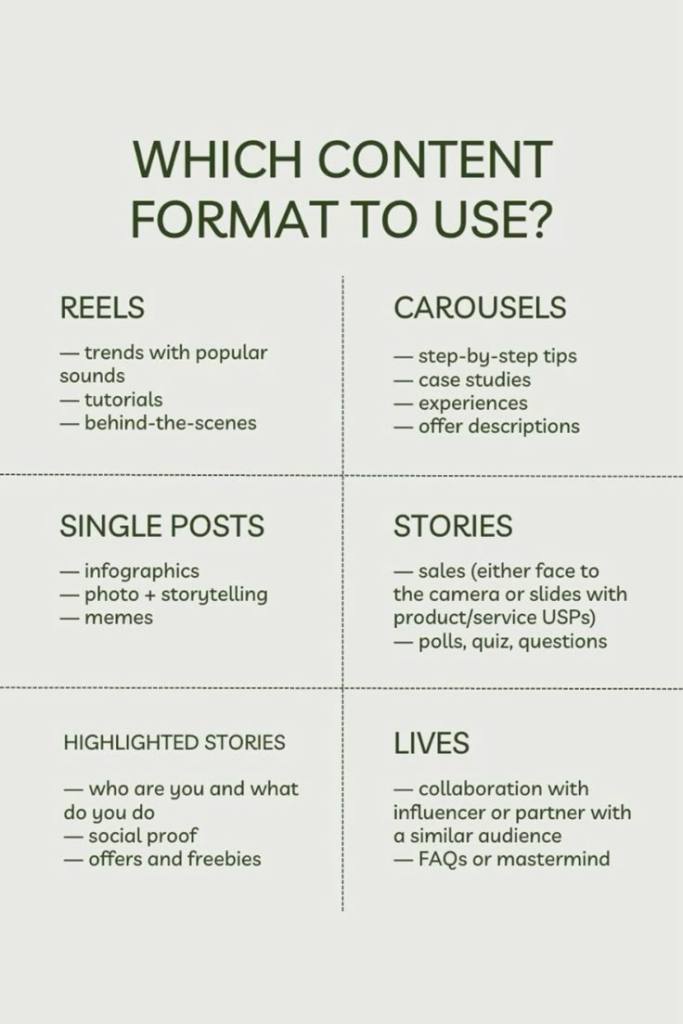
Source: Pinterest
***
Social media can feel noisy and overwhelming. But it doesn’t have to be.
When you approach it with intention, clarity, and authenticity, it becomes one of the most powerful tools to grow your coaching business.
You don’t need to go viral. You don’t need to be everywhere. And you definitely don’t need to be someone you’re not.
Show up consistently as you.
Focus on connection over perfection. Serve before you sell. Build trust before asking for a sale. And most importantly, enjoy the journey.
You have something valuable to share, and the right people are out there, waiting to hear it.
P.S. If you need help building your brand or personal brand on social media, I’d love to help.
 Tina Writes.
Leave a comment