
It takes courage to ask for help. To admit you’re struggling. To let someone into the most vulnerable parts of your life.
That’s why choosing a life coach isn’t just a rational decision. It’s an emotional one.
And nowadays, people aren’t only searching for expertise.
They are looking for someone they feel safe with.
Someone who understands them,
Someone they can trust.
And that’s where your brand comes in.
I know you didn’t become a life coach to “build a brand.” You started this journey because you care and because you want to help people.
Don’t worry, personal branding isn’t about selling. It’s about showing up in a way that feels true to who you are so the right people can find you, connect with you, and feel confident reaching out for support.
You don’t need to go viral or become an influencer.
But you do need to be visible, intentional, and real.
In this article, I’ll walk you through a clear roadmap to building a brand that is clear, authentic, and aligned with your work so you can reach the people you’re meant to serve.
Let’s begin.
Why life coaches need a personal brand?
If you want to help people, you need to help them find you first.
The world is changing. People don’t just find support through referrals. They don’t find it by accidentally stumbling upon a coach, either.
They search. They scroll. They compare. It’s a long journey.
And most of the time, they go with the one who feels like the right fit, not the one with the longest resume.
Let me give you an example. Imagine you’re looking to join a yoga class. However, you find that each instructor has a different style of teaching yoga. Some fast, some slow, some spiritual,…
Who would you choose? You will likely pick the one who resonates with your style and energy. And you can only decide when they demonstrate who they are to you. That’s what personal branding does.
It helps you get clients.
It helps your clients decide if you’re the right guide for them.
People who are looking for the support of life coaches are often in a vulnerable place. They’re dealing with things like anxiety, heartbreak, burnout, or self-doubt. The last thing they want is to feel more overwhelmed when they look for help online.
If your online presence is blank, confusing, or doesn’t tell them who you really are and how you can help them, they might give up and keep struggling on their own.
The truth is: Everyone has a personal brand.
Marcos Salazar said in his TED Talk: “Whether you realize or not, you have a personal brand. If I looked you up on Google and didn’t find anything about you on the first page of results, that’s your personal brand. If I found an out-of-date LinkedIn profile or a bunch of random social media posts, that, too, is your personal brand. […] Every single one of us has a personal brand, whether we like it or not. […] The question is: Do you want to be the one who’s driving and shaping this story? Or do you want chance or algorithms to be doing it for you?”
The good news is: You are in control.
So why don’t you use it to serve your mission, support your clients, and make a difference in the lives of those who need you most?

What is the difficulty in building a personal brand for life coaches?
Let’s be honest: Coaching can be very personal.
You’re not selling shoes or tech gadgets. You’re helping people face their fears, heal past traumas, process emotions, or rediscover themselves. That’s beautiful work, but it also means your clients often feel exposed, uncertain, or even scared.
And that’s exactly why how you show up online matters.
People don’t just want to know that you’re qualified. They want to feel that they can count on you enough to open up, be vulnerable, and let you into parts of their story they may never share with anyone else.
Building a personal brand is like planting a tree. You don’t just water it once and expect it to grow. You care for it, give it sunlight, prune the dead branches, protect it from pests, and, most importantly, stay patient. Over time, the roots get deeper. And one day, it starts to bear fruit.
The same goes for your personal brand. It’s not about posting random content here and there and hoping someone contacts you. It’s not how it works.
Besides, mental health is often hard to define. Many people feel “off” but can’t name the problem. Some don’t even realize that their struggle can be helped with coaching.
That’s why it’s so important to show up. To offer a space where they can feel safe and supportive.
Creating a personal brand can be complicated. It is far more than just a logo, font, color palette, or visuals. Don’t get me wrong here, they are all very important factors. With the right combination, they create a strong and positive impression that helps clients remember you easily.
However, in this article, I will only focus on the key steps in strategy a life coach can follow to build a successful and sustainable personal brand.
How to Build Personal Brands for Life Coaches
1- Know your “why”
Why are you on this journey?
Why do you choose to become a life coach?
Why do you want to help people?
Your “why” is more than just a nice story to tell. It’s the heart of your brand and the foundation for everything you do.
It’s what people connect with and what makes you relatable, trustworthy, and human.
Let’s be real; your future clients are not just looking for a “solution.” They are looking for “hope”.
They want to feel seen, understood, and guided by someone who gets it emotionally.
When you share your why, you give people a reason to believe in what you offer. You show them that you’re not just selling a service. You invite them into a journey and a transformation that can change their lives.
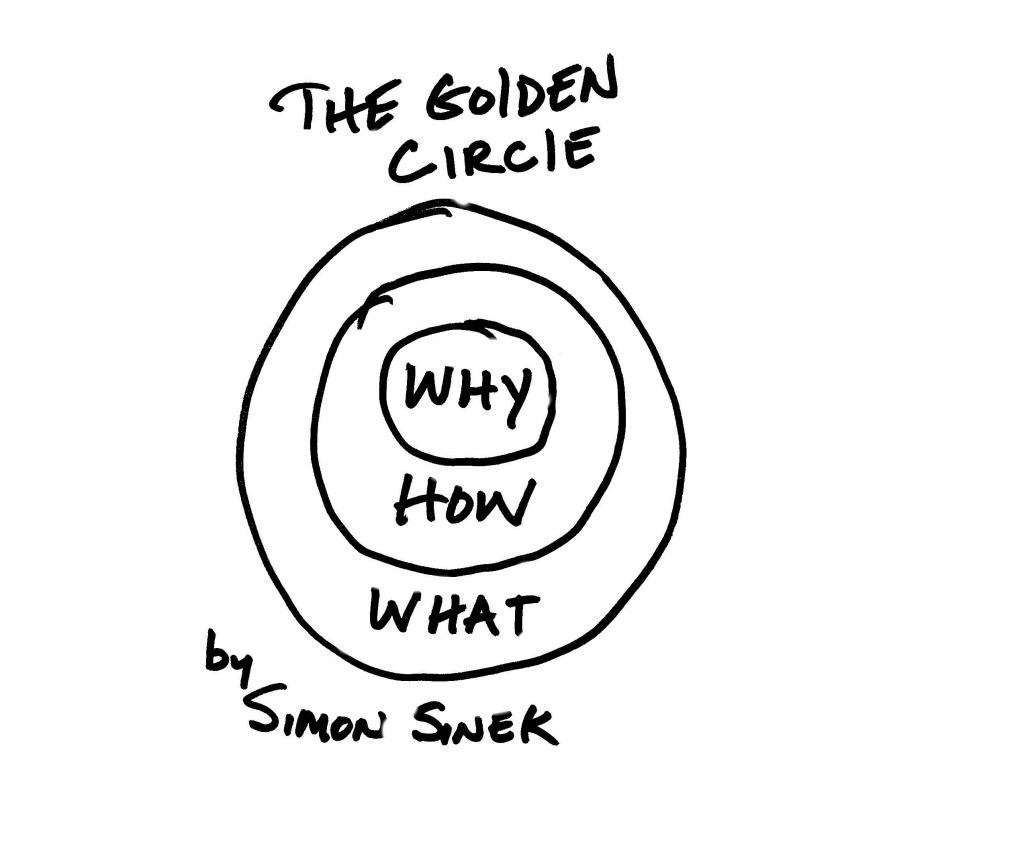
Just like Simon Sinek said: “People don’t buy what you sell, they buy why you sell it.”
For example:
Let’s say your why is: To guide young adults to discover their values, gain clarity, and design a life that is truly theirs.
How: Through a 1:1 Identity Coaching Package, which helps your clients connect with their inner selves.
Your “why” isn’t just for your clients. It’s for you, too. Because there are some tough days. Slow months. Moments of self-doubt and uncertainty.
But it’s easy to keep going forward when you know why you started.
So take time to find your why. Write it down. Come back to it whenever you feel lost.
2- Be clear about your niche
Let me give you a real-life example.
I had a friend who was cheated by her boyfriend. Her heart was broken, and she couldn’t overcome it herself. So, she decided to seek professional help from a coach
At that time, I was working for a life coaching & therapy brand. We also had a service package that offered support for people exactly in her situation.
She knew it, but she didn’t reach out. It’s her preference, but I just wonder why she didn’t consider us.
Later, I asked her why, and her answer stuck with me.
She told me, “I know your brand is famous. But you guys covered many areas. I just wanted someone who specializes in breakups and relationships.”
It totally made sense. I then had a meeting with my team after that.
Here is something many coaches struggle with: Trying to help everyone.
But the truth is, people are more likely to reach out when they feel like you truly understand their specific experience, and you have helped people like them before.
That’s why choosing a niche doesn’t limit you. It helps the right people find you faster.
When you focus on a niche and dedicate your time to bringing value, you will be more likely to become a thought leader in that niche. You become easier to recommend, easier to search, and easier to remember.
Once you have social media accounts, put your niche keywords in your social media bio. It helps platforms (and people) understand what you do at a glance.
You don’t need to stay in one box forever. Your niche can evolve. But starting with focus will help you build trust and grow much faster.
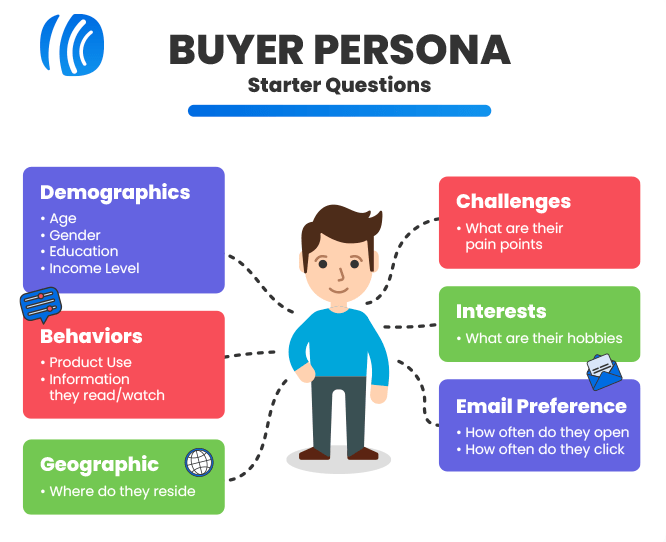
3- Know your target audience.
Understanding your audience is like a compass for all of your approaches.
Yes, your story, your energy, and your values matter a lot. But at the end of the day, the goal of your brand is to make your audience feel seen, supported, and understood.
“Your personal brand is not about you. It’s about the people you want to educate with the skills, knowledge, and value you can provide” – Marcos Salazar.
You know what to say, how to say, and most importantly, why you say it.
- So, who are they?
- What are they struggling with?
- What do they think about late at night when no one’s around?
- What kind of words would they use to describe their experience?
The better you know your people, the easier it is to:
- Create content that speaks to their heart
- Offer services that help
- Show up in a way that feels natural to both you and them
You don’t need to reach everyone, you just need to reach the “right” one, because reaching everyone = reaching no one.
Just like Allan Dib mentioned in his book “The 1-page Marketing Plan”: “When you try to appeal to everyone, you end up appealing to no one.”
I used to underrate this step when building an online presence for a life coaching and therapy brand. My number 1 goal was to reach as many audiences as possible. I tried to create content that inspires and resonates with everyone.
Although my content got a lot of views, most of them didn’t really care about our services.
When I asked for feedback, they told me that the page felt like a self-growth page, and they weren’t really sure what we do.
So, if you have just started, here’s what I recommend:
- Revisit your client list. Who did you love working with?
- Join online groups or forums where your potential customer shows up. Read their posts, comments… Notice how they describe their pain points or desires.
“The more you know about your audience, the less you have to guess.” ~ Andrew Davis – Marketing keynote speaker.
To learn more about how to identify your target audience, you can check out this blog by Hubspot.
4- Develop clear content pillars
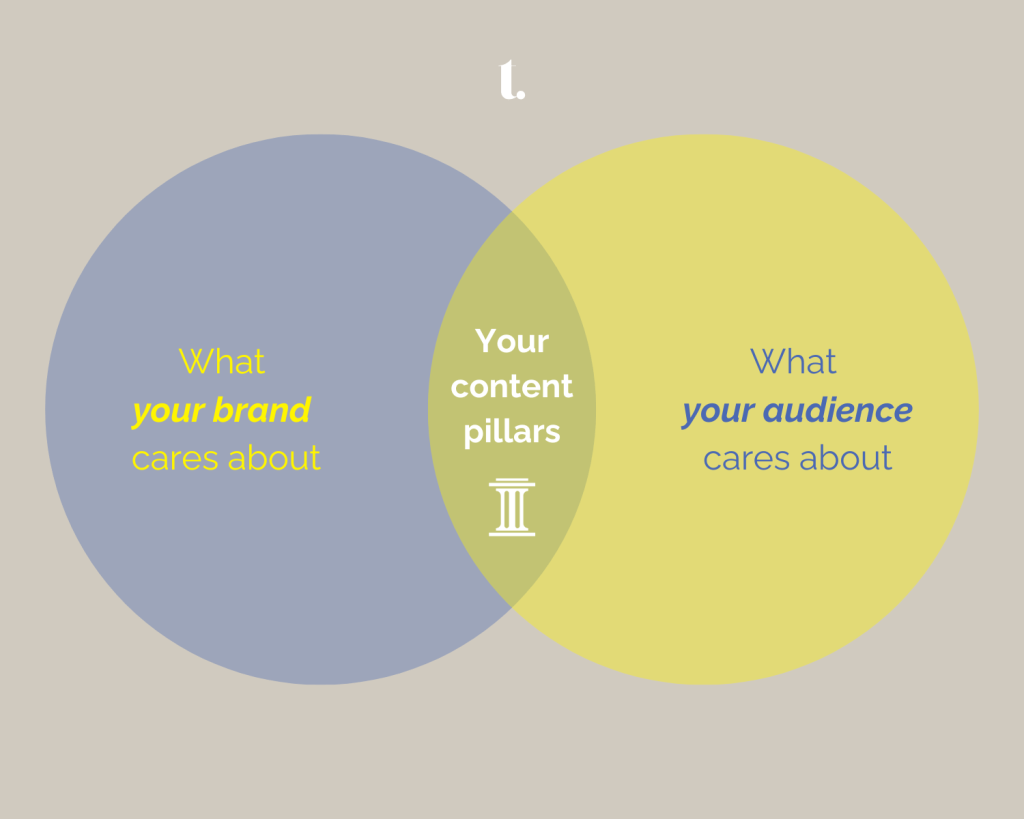
Content pillars are your brand’s core topics, the key themes you want to talk about or be known for. At the same time, these pillars should also align with your client’s needs and interests.
Content pillars help you stay focused, consistent, and connected with your audience. Instead of posting everything on social media, you create relevant content that resonates with your target audiences. You can mix and match creatively, but the foundation stays the same.
Besides, it helps you reach the right audience and position yourself as a thought leader in the niche.
An ideal content pillar should:
- Reflect on your expertise (what you are good at)
- Match your audience’s needs (what they care about)
- Align with your values and voice (what feels true to you)
If you don’t know where to start, here are some actionable tips for you:
- Have a small talk with your clients, and ask them what they care about or what they want to know more about.
- Research your competitors in your niche for references. Read their comments and feedback to see how the audience responds to their content.
- Join Facebook groups or forums or anywhere your clients are active most to see what topics your target audience is interested in.
Try writing down 2-4 topics you want to create content about.
Your target audience doesn’t just follow you for your expertise. They follow you because they feel connected to your vibe and your energy. (Just like the yoga experience I mentioned earlier). So you can consider creating a content pillar that showcases your unique personality and helps people get to know the real you.
The best part is: Once you have clear content pillars, you stop overthinking.
You don’t need to reinvent the wheel every time you sit down to write.
You just plug into the themes and speak from the heart.
5- Choose the right platforms.
It can be overwhelming to choose the platform to build your personal brand due to the number of available options out there.
However, you don’t need to be everywhere. When you have just started, focus on 1-2 platforms that align with your goals and where your target audience spends most of their time.
With limited resources, trying to be everywhere will only drain you.
It’s like when you choose exercises to lose weight. If you try to do yoga, go to the gym, do aerobics, go jogging, lift weights, or swim every day, you will get exhausted before you can achieve your goal. Sticking with an exercise can take you to where you want faster.

Suppose you want to build a solo career around this niche. In that case, you should have two channels: one for short-form content where you connect and build community and one for long-form content where you dive deeper into your expertise (like a website, a blog, or a newsletter).
6- Track Your Progress
Monthly tracking metrics will help you know how your strategy is performing. It shows you what’s working and what’s not, so you can adjust your approach with intention.
So, what should you track? That depends on your goal.
- If you’re just starting and want to grow your visibility: Track reach, impressions, profile visits, and new followers.
- If you focus on engagement: Look at saves, shares, DMs, and comments.
- If your goal is conversions (getting inquiries or bookings): Pay attention to clicks on your links and DMs.
Don’t forget to look at your content to see which posts attract the most interaction so you can keep creating similar ones.
Also, give yourself time. Growth is not fast and linear.
Focus on quality over quantity. Your follower count doesn’t say anything about your value. Remember, you are trying to attract the right audiences, not everyone. You don’t need 10,000 followers, you need the right 10, 50, or 100 people who truly care about what you do.
Tips to Grow Organically on Social Media
Not all of us have the budget for ads, and that’s okay.
You can leverage what you already have to build a strong personal brand organically.
They include:
1- Storytelling.
Everyone has stories. And everyone loves stories. (Remember the last time you read a book or watched a movie that was so thrilling you couldn’t take your eyes off it?)
Stories help you grab your audience’s attention and connect with them emotionally. And when they see themselves in your story, they connect. They remember. And they trust.
It can be your stories, your client’s stories (only with their permission), or any inspiring stories you find relevant on social media.

2- Authenticity
If you want to have real engagement, you have to be real you first.
It doesn’t mean you have to be perfect. It means you stay true to yourself instead of pretending to be someone you’re not.
Let them see your energy, sense of humor, or even vulnerability.
That’s what makes you stand out and memorable.
3- Consistency
Building a personal brand is a long journey rather than an overnight success.
It requires your consistency in showing up, sharing value, and interacting with your audiences even when you feel like you want to give up.
It’s okay to take a step back to rest, as long as you don’t quit.
Besides, being consistent doesn’t mean posting every day.
It means showing up consistently, whether it’s twice a week or three times a week.
To sum up,
As a life coach, your work is already making a difference. And building your personal brand is simply letting more people see that. It’s about opening doors so the right people can walk in.
You don’t have to be famous. You just need to be there, visible and present, so whoever needs you can find you.
This journey takes time. But it’s worth it.
I hope you find my blog useful for you. If you need any help with personal brand building or content creation, you can message me here.
 Tina Writes.
Leave a comment